HRT is a topic surrounded by both myths and mystery, so we asked straight-talking Dr Deborah Lee of Dr Fox Online Pharmacy to break down the who, why, when, what and how with this comprehensive guide…
Hormone replacement therapy (HRT) – is a much-Googled topic these days. Many women swear taking HRT has turned their menopause around and given them their life back. Around 2 million UK women currently take HRT and numbers are increasing. However, HRT is not a panacea for all ills. It needs to be used wisely. Others fear HRT and prefer not to take additional hormones. The mystique remains – should you or shouldn’t you take HRT?
In this blog post, I’m going to show you the key provisos for using HRT safely and getting the best benefits from it. Exactly what is HRT? Who is suitable and who is not? Why take it? When to take it? How to take HRT safely and effectively?
It should be noted that there are many nonhormonal treatments and complementary therapies for menopausal symptoms which some women may prefer.

What is HRT?
HRT is a hormonal therapy. It means taking the hormone oestrogen – and sometimes progesterone – to replace the reproductive hormones your body is no longer making.
The perimenopause is 5 years or so before the last menstrual period. During this time oestrogen levels fall by 90%. The female body needs estrogen for many metabolic and physiologic processes, hence the body protests by creating a huge range of symptoms which were outlined in my previous post (Me and my menopause).
HRT oestrogen is a synthetic oestrogen which is made in a laboratory but is chemically identical to the estrogen your ovaries were making before they began to fail. This means that your body has lived with this oestrogen since you went through puberty. It is not something it hasn’t seen before. (And by the way – HRT oestrogen is no longer made from horse urine!)
If you still have your uterus, i.e. you haven’t had a hysterectomy, you also need to take progesterone. This is because oestrogen stimulates the endometrium – the cells lining the womb. Progesterone counteracts the effect of oestrogen on the endometrium. If you take oestrogen without progesterone this is called unopposed oestrogen and increases your risk of endometrial cancer. Taking progesterone with oestrogen significantly reduces this risk. Note that it does not reduce the risk completely and abnormal bleeding on HRT must be reported to your GP or menopause specialist.
who is suitable?
Who can take hrt?
Any woman with troublesome menopausal symptoms can consider HRT. Studies show HRT is the most effective way to stop hot flushes and night sweats. Menopausal symptoms could occur at any time from your 40s onwards.
Studies show that for women who take HRT for 5 years as they go through the menopausal transition, the benefits are far more likely to outweigh the risks. You don’t have to have hot flushes and night sweats to take HRT – it can be highly beneficial for many other menopausal symptoms too. However, each woman needs to have an in depth discussion with her GP or menopause specialist to decide what is best for her.
Note that women with premature ovarian insufficiency (POI) are a specific group of women who have had premature menopause – a menopause before the age of 40. Women with POI are strongly recommended to take HRT until the age of 50. This is a complex condition and needs to be managed by a Gynaecologist or an Endocrinologist with a special interest in the condition.
Who shouldn’t take hrt?
There are very few absolute contraindications to HRT. If you are suffering from menopausal symptoms, go and see your GP or local menopause specialist to discuss what can be done. Below is a list of conditions that need careful consideration.
Breast cancer
Many women erroneously believe they may not be suitable for HRT as they are at a higher risk of breast cancer. In fact, even if you have a close history of breast cancer in the family, HRT is still permitted. Taking HRT for 5 -10 years, as you go through the menopausal transition, is more likely to result in benefits than harm.
Unfortunately, breast cancer is a common cancer. 1 in 7 women will develop breast cancer in their lifetime whether they have taken HRT or not. Breast cancers may be diagnosed after starting HRT, perhaps because women become more breast-aware and start examining their breasts. HRT may also mean that a pre-existing breast cancer grows more rapidly and is detected earlier under the influence of HRT. But it does not mean the HRT caused the breast cancer to develop in the first place. Earlier detection means earlier treatment. No studies have shown HRT affects breast cancer survival,
It’s a salient point that drinking 2 glasses of wine per night or being overweight (BMI 25-30) or obese (BMI 30 or over) causes many more cases of breast cancer than HRT!
Any woman considering HRT should be examining her breasts regularly and be up to date with her screening mammograms.
Your personal history and family history of breast cancer should be discussed with your GP and/or local menopause specialist. If you have a very strong history of breast cancer in your family you may be referred for genetic breast cancer testing. If this is the case, or you have specific concerns, see your GP or your local menopause specialist. However, recent research shows that HRT does not seem to increase the cancer risk in those with BRACA gene mutations.
Venous thromboembolism (VTE)
VTE (blood clots) – Deep vein thrombosis (DVT) and Pulmonary Embolus (PE) are serious medical conditions which can be fatal. Although oestrogen is known to increase the risk of VTE, the risk is only increased when taking HRT by mouth. If oestrogen is used as a patch or a transdermal gel, the increase in VTE risk does not apply. Other factors are also important in the development of DVT or PE – such as obesity, immobility, dehydration, and air travel.
If you have had a DVT or a PE, this is often not a complete contraindication to HRT and this should be discussed with your GP and/or local menopause specialist.
Cardiovascular disease
Having cardiovascular disease is not a contraindication to HRT. Oestrogen has many positive benefits for arterial walls. The British Menopause Society recently (March 2024) produced evidence-based guidance for women who have known coronary artery disease and have had a heart attack. They concluded that a woman on HRT who sustains a heart attack does not necessarily have to stop it. Also that a woman who has a heart attack can be given HRT if it is required. However the dose and formulation are important – the lowest dose, preferably a transdermal preparation – and oestrogen-only HRT where appropriate. If you have angina, have had a heart attack, or have peripheral arterial disease, the use of HRT should be discussed with a menopause specialist.
Stroke
This is classed as a form of cardiovascular disease but I’ve listed it separately here. A stroke can be caused by either a clot (a thrombosis), or a bleed (a haemorrhage) in the brain. Oestrogen is believed to have the same positive effect on arterial walls in brain tissue as it does in the heart and the rest of the body. NICE guidance states there is a small increased risk of stroke from taking HRT tablets by mouth – but not from transdermal HRT – patches and gels. If you’ve had a stroke it’s advisable to take advice about HRT from your GP or menopause specialist.
Undiagnosed vaginal bleeding
Any erratic bleeding around the time of menopause, or bleeding more than 6 months after your last period should be investigated. There is a risk of endometrial (uterine) cancer, plus other gynaecological cancers. Most women will not have cancer, but they still need to be seen and any serious problems excluded. If you’ve had intermittent, erratic or heavy bleeding around the menopause or any bleeding since your periods stopped, see your GP without delay. This should be dealt with before you start taking HRT.
Women thinking about HRT should be up to date with cervical screening. If you are overdue a cervical smear, it’s so important to make an appointment and get this done. Cervical smears save lives.
Active liver disease
Oestrogen can cause hepatic cholestasis – the slowing of the flow of bile, hence it can worsen pre-existing liver disease. In acute liver disease, HRT should be stopped. But once liver function has returned to normal it can be used. In general transdermal HRT – patch or gel is recommended as this largely bypasses the liver and has little effect on liver function. If any of this applies to you, it needs to be discussed with your GP or menopause specialist.
Pregnancy
You should not take HRT if you are trying to become pregnant or are pregnant or breastfeeding as the effects of HRT on the pregnancy have not been fully researched.
Why take Hrt?
The BMS published a 2020 document listing the benefits and risks of HRT. There’s no doubt that perimenopausal women, who may suffer from any of a huge range of symptoms – see me and my menopause – are far more likely to derive benefit from HRT than harm.
Systemic HRT (tablets, patches or gel) benefits:
Control of menopausal symptoms
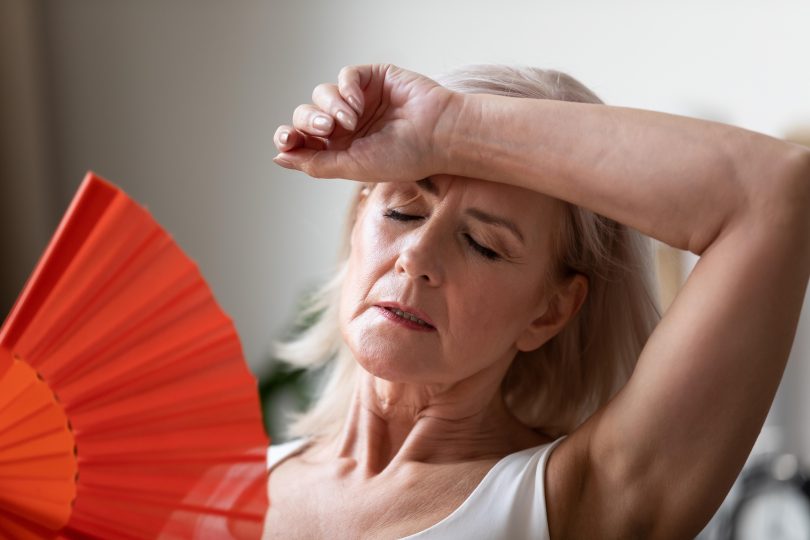
Hot flushes, night sweats, and many more. Numerous studies show that HRT is the most effective treatment for hot flushes and night sweats. If taken at the correct dose and formulation hot flushes and night sweats should disappear completely.
Maintenance of bone density and a reduced risk of osteoporotic fractures
Your bones demineralise rapidly during the perimenopause, becoming weaker, more brittle and more prone to fracture. This bone loss continues after menopause but at a slower rate. Osteoporosis is a silent disease – you don’t know you have it until you have a fracture. HRT is the most effective way to retain bone density and reduces the risk of fracture by 50%. To find out about your bone mineral density you need to have a DEXA bone scan which can be arranged through your GP. Peri and postmenopausal women need to think carefully about bone protection.
Reduced risk of cardiovascular disease and Alzheimer’s Disease
Recent research shows that oestrogen is neuroprotective and reduces neuroinflammation. If it is used through the window of opportunity it can reduce the risk of Alzheimer’s Disease and dementia.
Note that to get the best results from HRT it needs to be taken through ‘the window of opportunity.’ This is the 10 years of the perimenopausal transition – from when menopause symptoms first start, in the mid-40s or early 50s – for the next 10 years. After this time, around the HRT of 60, it is often too late for HRT to make a difference in any of these disease processes.
Reduced risk of bowel cancer
studies show HRT reduces the risk by 20%.
Reduced risk of type-2 diabetes
HRT has been shown to reduce the risk of type-2 diabetes by 30%.
Topical oestrogen
Oestrogen vaginal pessaries or cream improves vaginal dryness, make sex less painful and can reduce urinary symptoms including reducing the frequency of UTIs. Using topical oestrogen is not the same as taking systemic HRT. It is only effective in the local vaginal tissues and has no clinically significant effect on the heart, blood circulation, blood clotting or arterial walls.
Some women need to use both systemic and topical HRT.

when to take hrt
You can start HRT as soon as you notice menopausal symptoms. This could be in your mid-40s or after. Taking HRT is a personal decision. Your GP will help you weigh up the benefits and risks.
Once you have started HRT you need to be seen every 3-6 months to make sure the preparation is suiting you and there are no adverse effects. Once you are established on a regime you should be able to have a repeat prescription.
There is no absolute recommendation on when to stop HRT. Some women take it well into old age. 5% of women have hot flushes for life! And can’t manage without it.
what to take
HRT is available as tablets, patches or gel. The oestrogen is a natural oestrogen, chemically identical to what your ovaries used to be producing.
If you have a uterus you do need to take progesterone as well. This is very important and you must not stop taking the progesterone component.
Sequential HRT
This means you take estrogen for the whole month but progesterone just for the last 2 weeks. When you stop the progesterone and go back on the oestrogen, this is when you are likely to have a light bleed. Some women don’t bleed on sequential HRT and this is nothing to worry about so long as you have taken your tablets correctly.
Continuous combined HRT
This means taking both oestrogen and progesterone for the whole month. This is ‘no bleed’ HRT. In general, to take no bleed HRT, you need to have had no periods for 2 years, or be aged 54. If you start it too early, you just get a lot of erratic bleeding. It’s usually better to have a light predictable bleed.
The only way to speed up stopping bleeding completely, is to have a Mirena IUS (a hormone coil) inserted and take HRT oestrogen with this. This is very likely to reduce and eventually stop your bleeding. This is a very popular option for perimenopausal women as this gives contraception, HRT and control of bleeding all in the one device/regime.
Note that HRT is not contraceptive and women should use contraception until they have had no periods under 50 for 2 years, over 50 for 1 year or be age 55.
How to take it
Once you’ve decided to take HRT, you need to decide whether this will be a tablet, patch or gel. No formulation is better than any other, although there may be some safety advantages to using a patch. Some women like taking tablets and find it very convenient. Others dislike tablets and prefer the patch or the gel. It’s just down to personal preference.
For the tablets, take them at the same time every day and don’t miss out, as this is likely to cause irregular bleeding.
For the patches, check with the Patient Information Leaflet. Some need to be changed once a week, some twice a week. Apply the patch to clean, dry skin, anywhere but avoid the breast or the vulva – usually, the lower abdomen is preferred. Rub for 30 seconds when you stick the patch to the skin to activate the adhesive. Set a reminder to take off the old patch and apply a new one on the right day. Some women are sensitive to the patches which can cause redness and irritation of the skin. If this occurs you will not be absorbing the hormones correctly so see your GP.
EstroGel is generally applied one pump, to one arm, each day. Apply this after a bath or shower. Spread the gel over the skin and allow it to dry on the skin – don’t rub it in. Don’t apply sunscreen or swim within one hour of application.
Conclusion
So now you know! The ‘who, why, when, what and how’ of HRT. I would advise that because taking HRT is a big decision and can be confusing, take your time. Don’t be afraid of HRT. Remember your body has been producing the same hormones since you went through puberty! HRT used correctly is far more likely to cause benefit than harm.
First, read and get as much knowledge as you can. HRT is just one option – there are nonhormonal options for managing many menopause symptoms. Next, see your GP and write down a list of questions to take with you. If you still aren’t sure or don’t get the advice you need, you can ask your GP to refer you to your local NHS menopause clinic. You can find your nearest menopause clinic here.
If you have any specific medical conditions you may need a specialist recommendation in terms of whether or not you should be prescribed HRT, from an appointment at the menopause clinic.
helpful websites
- Women’s Health Concern – HRT: Benefits and risks
- Women’s Health Concern – HRT
- Menopause Matters
Dr Deborah Lee, Dr Fox Online Pharmacy