Dr Deborah Lee from Dr Fox Online Pharmacy wants hair and beauty professionals to consider the flu jab to protect against this season’s strain
Working in the beauty industry puts you at high risk of infections such as influenza (flu). You are in a front-facing role that involves close contact with various members of the public, sharing materials/surfaces, and is not conducive to social distancing.
A nasty bout of flu can put you out of action for 2 weeks or more. If you are eligible for a flu jab, it is highly recommended that you get vaccinated. If you are not eligible, you could consider having a private injection, which typically costs £15 – £20.
What is the flu jab?
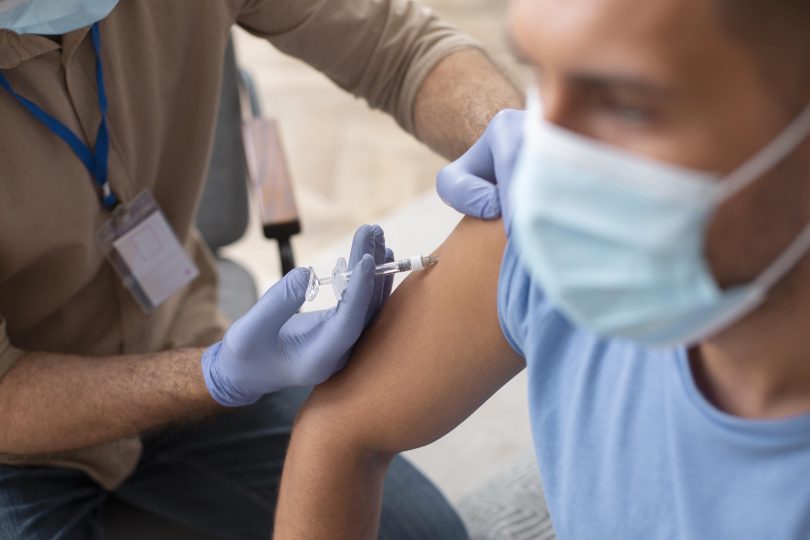
The flu jab is an injection that contains a tiny amount of dead influenza (flu) virus particles.
After being injected, your white blood cells recognise these foreign cells and produce antibodies. This means if you later come into contact with the live flu virus, your body has already been primed and rapidly produces more antibodies, stopping you from becoming infected. Because the virus is dead, you cannot get the flu from the vaccine.
Types of flu vaccine – Every year, scientists try to predict which strains of flu are likely to be circulating this winter. They produce the flu vaccine with these particular strains in mind. This year, the flu vaccine is either a trivalent (or in some cases, a quadrivalent) vaccine, as it has been targeted against three different strains of flu.
The flu vaccine contains egg – The virus is grown in eggs, so the vaccine can contain traces of egg or chicken proteins. It is not suitable for those with an egg allergy. If you have an egg allergy, speak to your GP. A specific type of flu vaccine is available for anyone with an egg allergy.
The flu vaccine contains adjuvants – The flu vaccine also contains adjuvants. These are substances that strengthen the antibody response to the vaccine. The allV vaccine contains an adjuvant called MF59C. This is a combination of squalene, polysorbate 80, sorbitan trioleate, sodium citrate, citric acid, and water.
The flu vaccine may contain traces of antibiotics – Antibiotics such as kanamycin and neomycin are used to produce the vaccine, so it should not be given to anyone with an allergy to these antibiotics.
Flu jabs do not contain latex – Flu jabs do not contain latex and are safe for those with latex allergy.
Who is eligible for a flu jab?
From the 1st of September 2025, according to GOV.UK, those who are eligible for the 2025/2026 flu jab include-
- All children aged 2 or 3 years on 31 August 2024
- Eligible school-aged children (from reception to year 11)
- All children aged 6 months to under 18 years in clinical risk groups (as defined in the Green Book, Chapter 19 (Influenza))
- Pregnant women
From October, this includes the following –
- Adults aged 65 years and over (including those who are 64 but will be 65 on or before 31 March 2025)
- Anyone with a chronic illness such as heart disease, COPD, asthma, diabetes, kidney disease, a learning disability, severe mental illness, a weakened immune system, or is obese with a BMI of 40 or over.
- Adults aged 18 years to under 65 years in clinical risk groups (as defined in the Green Book, Chapter 19 (Influenza))
- Those in long-stay residential care homes and other long-stay care facilities where rapid spread is likely to follow the introduction of infection and cause high morbidity and mortality (this does not include, for example, prisons, young offender institutions, university halls of residence)
- Carers in receipt of carer’s allowance, or those who are the main carer of an elderly or disabled person
- Household contacts of immunocompromised individuals
- Frontline workers in a social care setting without employer-led occupational health schemes, including those working for:
- a registered residential care or nursing home
- registered domiciliary care providers
- voluntary managed hospice providers
- those who are employed by those who receive direct payments (personal budgets) or Personal Health Budgets, such as Personal Assistants
Many of those working in the beauty industry will not be eligible for an NHS flu jab, but you can still choose to pay for a flu jab privately.
This block is currently empty. Please add some content.
Why do people need a flu jab?
Having the flu jab will help protect you from having the flu. The flu is not the same as a cold. Although in most people who are fit and well, the flu generally lasts for less than 7 days, it can be a serious infection, especially for older people, those with chronic illnesses, those who are immunosuppressed, and babies and small children.
In 2023-2024, 15,000 deaths were reported in association with the flu. Children aged under 5 have the highest rate of hospital admissions due to the flu.
Having the flu jab gives you the best chance of not becoming infected with the flu virus, and this also means you will not be able to pass it on to other people.
Having your child vaccinated helps prevent them from contracting the flu and potentially developing serious complications such as pneumonia and bronchitis. For children, the vaccination is given as a painless nasal spray.
How is the flu virus spread? – The flu virus is spread when an infected person coughs, sneezes, or even talks and breathes out the tiny droplets in their expelled air, mucous or saliva. Viral flu particles also survive on infected surfaces and can be picked up if you touch these and then put your hand in your mouth.
How to reduce the risk of flu – To reduce the risk of flu, cough or sneeze into a hanky and throw it away. Cover your mouth and nose whenever you cough. Keep worktops, door handles, TV remotes and other gadgets regularly cleaned with household disinfectant. Regularly wash your and your child’s hands. Keep a child with the flu away from school or nursery until they feel better, which might be a week or longer. If you have the flu, stay away from work for at least 5 days, or until you have not had a fever for 24 hours and are feeling better.
Antibiotics do not treat flu – The flu is caused by a virus. Antibiotics are not effective against viruses. They kill bacteria only. So, if you get the flu, antibiotics will not help get rid of the flu infection.
How safe is the flu jab?
Most people tolerate the flu vaccine well. The most common side effects are a low-grade temperature, feeling under the weather for a day or two, feeling tired , headache, muscle pain, and redness or swelling at the injection site.
Acute allergy (anaphylaxis) can occur with urticaria (hives), tight-chestedness, wheezing, difficulty breathing, and collapse – but this is extremely rare. You can read more about the side effects of the flu vaccine here.
How effective is the flu jab at preventing flu?
Between 2015- 2020, the flu vaccination program prevented 15%-52% cases of flu.
A 2019 study, which included 20,000 pregnant women followed up for 6 years, found that the flu vaccine prevented 40% of hospital admissions for flu.
A 2017 US study of 52,000 babies whose mothers had had a flu jab in the first 3 months of pregnancy, and compared them to 370,000 babies who had not had the flu jab. They found no difference in the rate of birth defects between the two groups.
Note that even if you get flu, after a flu jab, the infection is likely to be les severe and not last as long. The flu jab helps avoid the need for admission to hospital with flu.
Myths about flu jabs
Don’t believe what people tell you or the fake information on the internet. Here are some common myths about flu jabs.
A flu jab can give you the flu – FALSE. The flu jab is made from a dead virus which cannot give you a flu infection.
You don’t need a flu jab if you are healthy – FALSE. Even healthy people can get severe flu. Having the flu jab helps prevent the spread of the infection to other people, including babies, children and vulnerable adults.
The flu jab is not safe for pregnant women – FALSE. The flu jab does not cause miscarriage or any other pregnancy complications. It’s safe to have it any stage of pregnancy and the mother passes some immunity to the baby. Speak to your midwife.
You only need to have a flu vaccination once – FALSE. The virus is always mutating so you need to have a vaccination once a year.
It may be too late to have a flu jab – FALSE. Ideally, have a flu jab in the autumn before the winter months kick in. But it’s never too late to have a flu jab.
You can’t have a flu jab if you have an egg allergy – FALSE. There is a specific flu vaccine that does not contain egg that is safe for egg allergy sufferers.
Where can I get the flu jab?
UK adults can get a flu vaccination from their local pharmacy – click here. You can now have the flu and COVID-19 jab at the same time.
You can also get a flu jab at your GP surgery, via maternity services if you are pregnant, at a care home if you live in a care home, and via your employer if you are a health or social worker. You can book a flu jab via the NHS app.
If you want to pay for a flu jab, ask in your local pharmacy.
Where can my kids get it?
Children are given a quick, painless nasal spray (Fluenz), so vaccination is easy.
Children aged 2-3 should receive an invitation from their GP surgery in the autumn for a flu jab. If not, the parent should contact the GP surgery.
School-age children should get their flu jab at school. If they miss it for some reason, it can be given at a community clinic. For more information, click here.
- NHS – Children’s flu vaccine