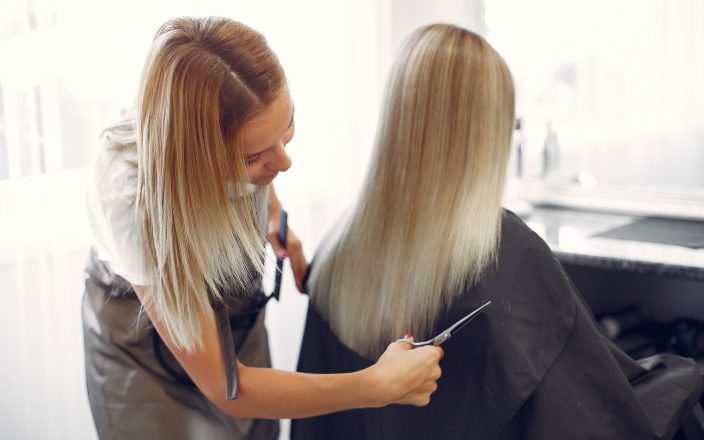
A good head of hair is a sign of good health. A hairdresser is in a unique position to spot trouble if the hair condition changes.
A few weeks ago, my friend’s hairdresser noticed that her hair was looking thin and advised her to have a blood test. Well done to the hairdresser, as it turned out that she is iron deficient. She had low levels of ferritin. This is the protein that stores iron inside the cells and releases it to make haemoglobin, the all-important molecule that transports oxygen in our red blood cells to every cell of the body.
Untreated, iron deficiency leads to iron deficient anaemia which is life-threatening condition.
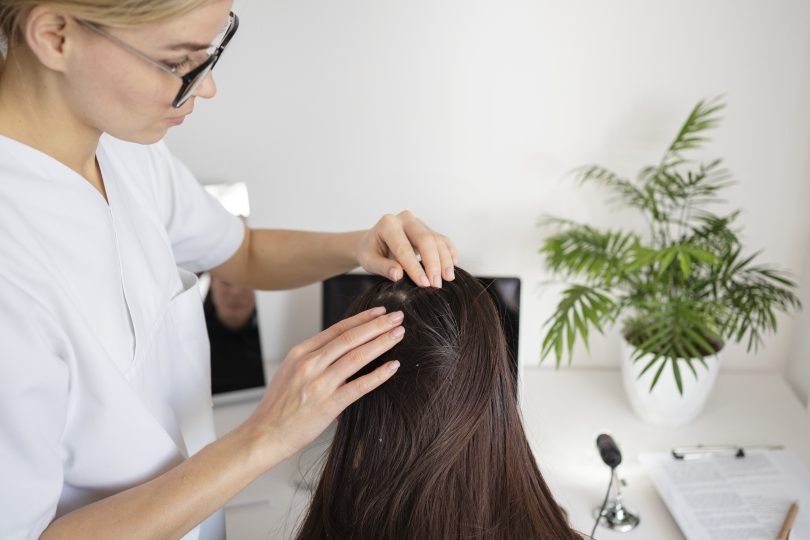
How common is hair loss and iron deficiency?
Hair loss is a common symptom in women with generalised hair loss.
A 2021 systematic review and meta-analysis, including 36 studies and 10,029 women with non-scarring alopecia, found that 21% (around 1 in 5 women) had a low serum ferritin of between 0 to 15 ng/dL. The normal ferritin level for a female can be up to 300 ng/dL, and any value of 30 ng/dL or under is concerning.
Why does iron deficiency cause hair loss?
Let’s start by explaining the hair growth cycle. Each hair goes through four cycles of growth:
Anagen phase
This is the active growing phase and is the longest phase. The hair keeps growing until it is cut. Around 80%-90% of your hair is regularly in the anagen phase.
Catagen phase
This is also the transitioning phase which lasts about 10 days and occurs at the end of the anagen phase, when the hair follicles start to shrink.
Telogen phase
The hair now passes into this resting phase. It doesn’t fall out, but new hair starts to form in the follicle. Around 5% of your hair is in the telogen phase at any one time.
Exogen phase
This is the end of the telogen phase in which hair is shed from the follicle. The new hair is pushing up from underneath the old hair.
Exactly how and why iron deficiency causes hair loss is not known. Studies have had conflicting results. It may be because:
- When iron stores are low, haemoglobin is also reduced, and this impairs the transport of oxygen to the developing follicle.
- Iron deficiency is linked to chronic inflammation, which in itself disrupts the ability of the hair follicle to grow hair.
- If iron deficiency is not corrected, the next step is iron deficient anaemia, which is associated with a telogen effluvium (TE). A TE occurs when 70% of the hair passes into the telogen phase at the same time and a lot of hair is shed all at once. This commonly happens, for example, after pregnancy.

What other tests are needed?
If iron deficiency is suspected the following blood tests are needed:
- Full blood count (this includes haemoglobin and mean cell volume (MCV)
- Ferritin
- Serum iron
- Transferrin and total iron-binding capacity (TIBC)
- Iron saturation
It’s important to note that iron deficiency and iron deficient anaemia are symptoms and the next step is to look for the cause. Yes, you need to improve your iron intake, but you need to find out what has caused your iron stores to be low. It could be due to your diet and not eating enough iron-rich foods, malabsorption from the gut, or chronic blood loss from heavy periods or from conditions affecting the bowel.
Once a diagnosis of iron deficiency has been made, further tests are likely to be needed. These include:
- Faecal occult blood (FOB) testing for the presence of blood in the poo.
- Gastroscopy looking for any site of bleeding in the upper GI tract such as a bleeding stomach ulcer or a tumour. A barium meal may be needed to image the small intestines. A biopsy may be needed to rule out coeliac disease. A colonoscopy will inspect the large bowel for polyps, diverticulitis, inflammatory bowel disease and tumours.
- The urine needs to be checked for the presence of blood and further tests done on the kidney and renal tract if this is positive.
- In women with heavy periods, they will need to see a Gynaecologist and have an ultrasound and/or hysteroscopy of the uterus and investigations of the female reproductive tract.
- Other blood tests may be needed to look for conditions such as sickle cell disease or thalassemia.
who is at risk of iron deficiency?
Vegetarians and vegans
There are two types of iron – haem and non-haem iron. Haem iron comes from meat and non-haem iron comes from plants. Non-haem iron is not so well absorbed, and vegans and vegetarians are at higher risk of iron deficiency.
Pregnancy and breastfeeding
This is because your blood volume increases during pregnancy so more iron is needed. Iron is also required for the production of breast milk.
Frequent blood donors
You should not donate blood any more often than every 12 weeks. This gives enough time for your iron stores to be replenished.
Women with heavy periods
Around one-third of women are at higher risk of iron-deficient anaemia due to heavy periods. If you have to change your pad or tampon every 2 hours or more often, pass clots and flood in the bed, you are likely to have iron deficient anaemia and should see your GP.
Older adults
Older people often have a poorer diet, a reduced appetite, and exercise less often. They are more likely to have chronic medical conditions and take medication which can all affect the absorption of iron.
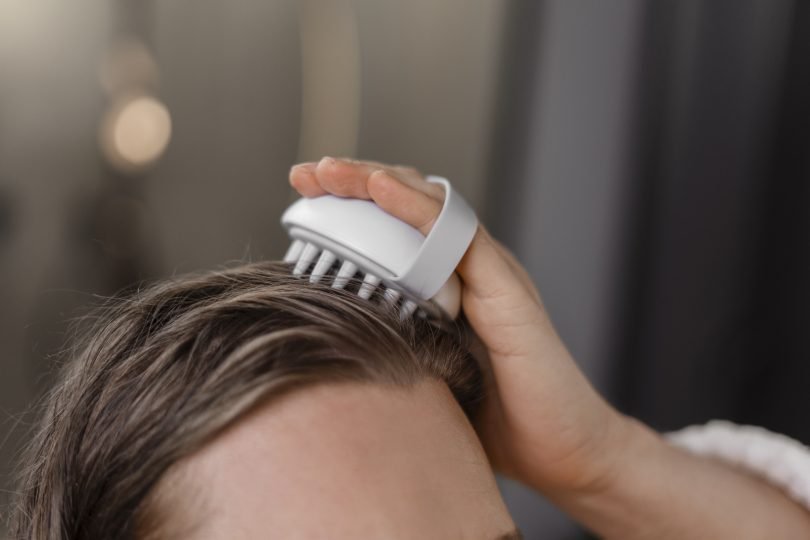
How can it be treated?
The best way to treat iron deficiency and iron deficient anaemia is to treat the underlying condition. However, the missing iron stores need to be replaced as soon as possible.
This can be done by increasing the amount of iron in your diet, and/or taking iron supplements.
Increasing iron in the diet
Foods with a high iron content are listed below. You should be able to get enough iron from eating a balanced diet. You can improve your absorption of iron from the gut by having vitamin C rich food with it, by eating salad with meat or drinking orange juice with your breakfast cereal.
- Red meat and liver
- Poultry
- Shellfish
- Dark green leafy vegetables such as broccoli, spinach and kale
- Avocado, strawberries and watermelon
- Dried fruits such as raisins, prunes and apricots
- Breads, pasta and breakfast cereals fortified with iron
- Eggs
- Lentils, beans, peas, chickpeas and other pulses
- Oats
- Mushrooms
- Dark chocolate
Iron supplements
If you have iron deficiency you need 150 – 200 mg per day of elemental iron (2 to 5 mg of iron per kilogram of body weight per day). This is a higher dose than you will find in a multivitamin tablet and needs to be prescribed by your GP.
There is no one type of iron supplement that is better than any other. It can be prescribed as ferrous sulphate, ferrous gluconate, ferric citrate and ferric sulphate. These normally turn your poo black. Commonly they cause tummy upset, such as diarrhoea, constipation and flatulence.
Iron supplements should be taken on an empty stomach 1-2 hours before meals. Ideally, swallow the tablet or capsule with a glass of orange juice as this is high in vitamin C and aids iron absorption. Don’t take iron supplements at the same time as antacids, milk, caffeine or calcium supplements.
It’s important to only take iron supplements as long as is needed. When things are better your GP will tell you to stop taking it. Don’t continue to take it when it’s not needed. Your body isn’t good at excreting iron, and you can have too much iron in the body which is dangerous for health.
Iron infusions
If you need to replace iron quickly, you may be offered an iron infusion. This means going to the hospital and having the iron given intravenously using a drip. Your doctor will explain if this is needed and what will happen.
Will the hair grow back?
Improving your iron stores and correcting iron-deficient anaemia should encourage your hair to grow back. But it can take many months and there is no instant solution. However, if you don’t correct your iron stores and haemoglobin, your health will continue to suffer and your hair loss is likely to get worse. A telogen effluvium can take 6 months for regrowth to become apparent.
Final thoughts
The hairdresser is uniquely placed to check on the condition and appearance of a person’s hair. In the UK, around 3% of men and 8% of women have iron-deficient anaemia. That’s approximately 1 in 10 of your clients who will have this serious underlying problem. It’s vital that if you think there has been a change in the client’s hair, you let them know. This could be life-saving advice. Deficiencies of vitamins B7 (biotin), B9 (folate), B12, D and zinc can also cause hair loss.
For more information
- NHS – Hair loss
- Cleveland Clinic – Does iron deficiency cause hair loss?
Dr Deborah Lee of Dr Fox Online Pharmacy