Deborah Maguire, trichologist and co-founder of Seed & Soul, cuts through the collagen buzz to reveal the real science behind hair health. With collagen supplements dominating the beauty industry, Deborah, alongside Dr. Philip Wheeler, DMAc, a leading expert in integrative and functional medicine, explains what collagen truly does—and what it doesn’t. From the role of essential amino acids to the impact of stress on collagen production, she breaks down the facts, ensuring a smarter, science-backed approach to stronger, healthier hair.

Collagen is often marketed as the miracle ingredient for hair, but in reality, it plays a far broader role in the body. As the most abundant protein in the human system, collagen is found in skin, hair, blood vessels, joints, bones, muscles, and tendons—essentially holding everything together like the body’s natural glue. While crucial for overall tissue repair and structural integrity, consuming collagen does not directly translate to increased hair growth. Dr. Philip Wheeler explains that “collagen is an essential protein in the human body, and it comes in multiple types, each serving distinct functions. Type I and Type III collagen are the most important for skin, hair, and nails, providing the structural support needed for elasticity and strength. However, collagen must be broken down into amino acids before the body determines where to use it.”
Collagen is composed of amino acids found in both plant and animal proteins. When ingested, whether through food or supplements, collagen is broken down into these amino acids before the body decides how to allocate them. This means taking a collagen supplement does not guarantee increased hair growth, as the body prioritises other essential functions, such as joint repair and tissue regeneration. Your body doesn’t absorb collagen as a whole—it breaks it down into amino acids and decides where they’re needed most. Hair and skin are among the last to receive nutrients since the body prioritises essential organs first.
The natural production of collagen declines with age, but the solution does not necessarily lie in supplementation. Instead, the enzymes responsible for collagen synthesis require essential nutrients such as Vitamin C, bioflavonoids (including quercetin), B6, copper, manganese, and lysine. Many collagen supplements on the market also contain Vitamin C, leading to the question: Is the observed benefit due to collagen, or is it the Vitamin C that plays a critical role?
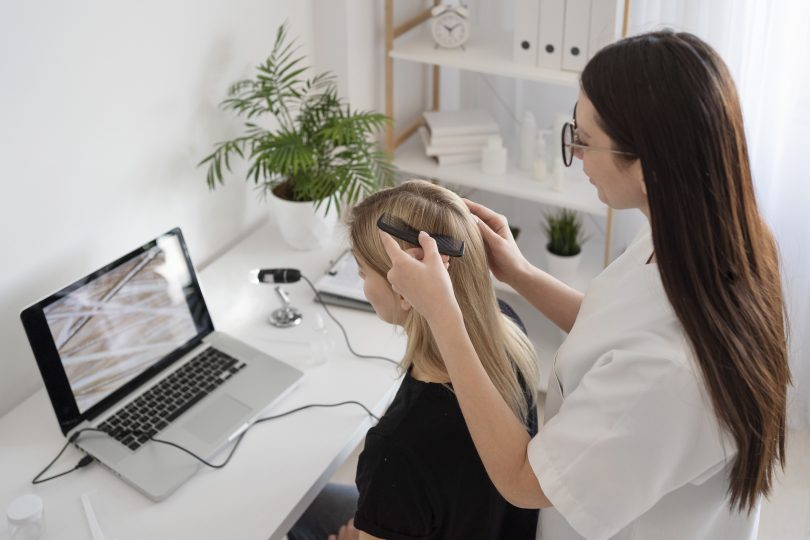
It’s noticeable that collagen supplements always contain Vitamin C—so which one is actually doing the work? Many collagen-based hair supplements also contain biotin, vitamins, and other beneficial nutrients. This raises the question of which ingredients are truly responsible for the claimed benefits. If an individual is deficient in amino acids, then any protein source—whether from food or a supplement—can be beneficial. However, a minimal amount of collagen added to a hair supplement often serves as a marketing strategy rather than a scientifically backed necessity.
Another key factor influencing collagen production is stress. Elevated cortisol levels can hinder the body’s ability to produce collagen. Rather than relying on supplements, a more effective approach may involve stress reduction through mindful relaxation and maintaining a balanced lifestyle. Cortisol can harm collagen production—so reducing stress is just as important as diet.
For those seeking to improve hair health, increasing the intake of natural Vitamin C, quercetin-rich foods, and a variety of protein sources that contribute to the amino acid pool is essential. While collagen supplements may provide some support, they are not the definitive solution they are often portrayed to be. High-quality hair supplements like Seed & Soul Nutrition for Hair can help maintain essential nutrient levels, supporting overall hair strength and vitality. If you’re worried about collagen deficiency, focus on whole foods, not just supplements. Your body knows what to do.