Have you noticed your skin feels dry and itchy in the winter months? Cold temperatures, wind, and dry air damage the barrier function of the skin, allowing more transepidermal water loss (TEWL) to take place. Your skin may feel tight, and look rough, along with dry chapped lips. Your skin may become inflamed, and more sensitive to allergens. Any pre-existing skin conditions can flare in the winter, as the level of inflammation in the skin rises.
But here’s the good news. There is much you can do to care for your skin in the winter and improve the health, look and feel of your skin.

Stay warm but not too hot!
Turn down the thermostat. The WHO state that the optimal home temperature for health is 18C (64.4F). However, a recent survey showed that 25% of Brits heat their home to 21C (69.8F) – which is higher than the average June temperature of Barcelona!
In addition, for each 1-degree C, you turn down the thermostat, you can save as much as 10% on your heating bill!
Your skin, like the rest of your body, prefers not to be over-heated.
Add humidity
The air in centrally heated homes tends to be overly dry. However, if you humidify the air in your home, this helps skin to be better hydrated and retain its moisture. The optimal humidity of your home for good skin health is between 40-50%.
Note that the opposite is also true. Excess moisture in your home results in dampness and mould. Around 29% of Brits live in damp homes. Too many properties are cold, badly ventilated and have high levels of condensation. Excess water in the air has serious negative health consequences including red eyes, itchy skin, nasal congestion, and allergic symptoms including wheezing and shortness of breath.
It’s important to check the humidity of your home and take the necessary steps to correct it.

Decide a good winter skincare regime
Only wash your face once a day in the winter
In warmer months, we sweat more and need to wash more often. But in the winter, we sweat less and only need to wash our faces once a day. Washing too often dries out the skin further and is counterproductive.
wash with tepid water
Don’t wash your face with hot water as this stimulates sebum production. Instead, gently wash with lukewarm water, and pat the skin dry with a clean towel.
Use a cleansing product all year round
It’s a good idea to wash using a facial wash cleanser as this cleans and exfoliates all in one go. Exfoliation means it unclogs pores which are often filled with sebum/bacteria and dead skin cells.
apply a skin toner
You may want to apply a skin toner next as this can also help improve skin hydration.

use an oil-based moisturiser
If you read the label and the product contains an oil, such as almond oil or jojoba oil, listed near the beginning of the list of ingredients, this is an oil-based moisturiser. These feel a bit greasier to apply but are important as they lock moisture into the skin. Examples include Aveeno Daily Moisturising Cream, Neil’s Yard Almond Moisturiser and Cetaphil Face and Body Moisturiser.
If you have very greasy skin, you may prefer a water-based moisturiser, There are many to choose from but examples include Simple Soothing Water Cream, Paula’s Choice Water-Infusing Electrolyte Moisturiser and Dermatologica Calm Water Gel.
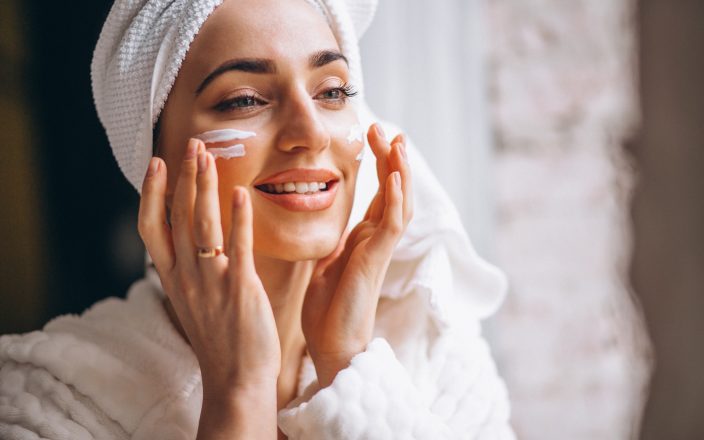
Use your moisturiser after washing/cleansing – twice a day. You only need a pea-sized amount. Rub it gently all over the face, rubbing it into the skin to allow it to be absorbed.
Nourish your skin with regenerative oils
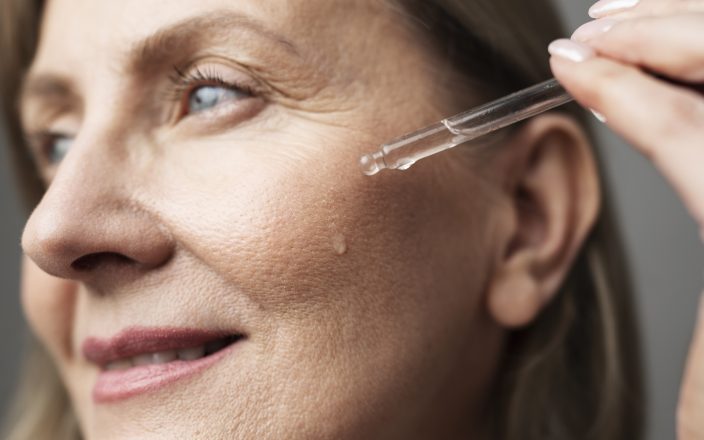
Applying a nourishing skin oil should be the last step in your skincare regime.
Shake 2 or 3 drops into the palm of your hand and apply this to the skin of your face at night. Examples include Rosehip Face Oil, Clarin’s Blue Orchid Treatment Oil or Liz Earle Superskin Concentrate Oil. These oils are potent antioxidants and lower inflammation in the skin, soothing redness as well as helping to restore the protective barrier function of the skin.
use suncream even in the winter
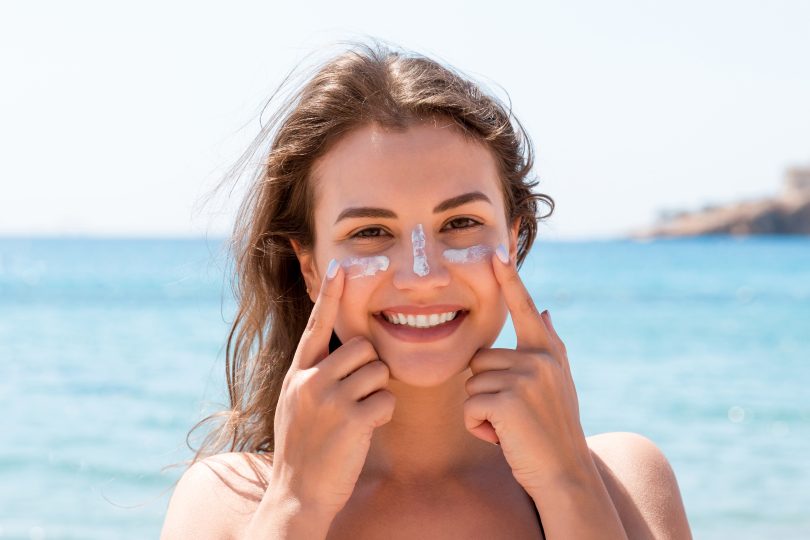
Dermatologists recommend you use sunscreen with at least SPF-30 protection every day, even in the winter. Although the sun is less powerful in the winter, there are still plenty of UVA and UVB rays which damage your skin. These UV rays are responsible for skin ageing. Not using sunscreen can accelerate fine lines, pigmentation, sagging and wrinkling of the skin.
If you do outdoor sports where there is snow and ice, this should be sunscreen with SPF-50 protection.
When to apply makeup and how to remove it
Apply makeup after you’ve applied your moisturiser. A liquid or cream foundation is a good option in the winter. Blend with a makeup sponge. Use waterproof mascara and eyeliner. Use lip balm before your lipstick.
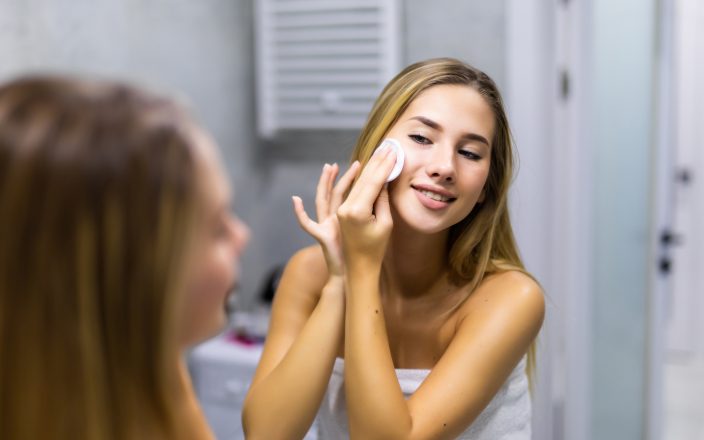
Always remove your makeup before washing at night. Use micellar water or make-up remover/cleansing balm. It’s important to remove make-up properly otherwise this encourages the formation of blackheads, pimples and acne blemishes. Use a flat cotton pad and work around your face carefully. Take special care of the skin around your eyes.
Eat a healthy balanced diet
For the best effects on your skin, make sure you get your 5-a day – some now say 10-a day. This is because fresh fruit and vegetables are rich in health-giving antioxidants and help lower inflammation in the body and the skin. This especially applies to food high in vitamin C.
Omega-3 fatty acids are also important as they also have strong anti-inflammatory properties. These are found in oily fish such as salmon, trout, mackerel, sardines and herring. If you don’t like fish, you could take an omega-3 fish oil supplement instead. Omega-3 is also found in flax seeds, chia seeds, walnuts and some fortified foods such as eggs and yoghurts. Stay away from processed and ultra-processed foods which are often high in fat, sugar and salt, all of which are not good for your skin. They can all raise levels of inflammation.
Take vitamin D supplements
Studies have shown that taking vitamin D supplements can benefit the skin by improving collagen production. Collagen is a major skin protein needed to make the extracellular matrix of the skin – the scaffolding that all the skin cells sit in.
Vitamin D also stimulates skin turnover, encouraging the removal of dead skin cells, and their replacement by newer ones. Having good levels of vitamin D has an anti-ageing effect on the skin.
In addition, vitamin D has an anti-inflammatory effect on the body and the skin.
The NHS recommends all UK adults take a vitamin D supplement, 10 mcg (400 IU) per day from October to the end of March. There are specific dosage recommendations for babies and children.

Make sure you are getting enough sleep
Although you may not know it, it is when you are asleep that repair and rejuvenation of your skin takes place! This is one reason why it is imperative to get 7-8 hours of good quality sleep a night. The blood flow to the skin increases at night, and more collagen is produced at this time too. This is why when you wake up in the morning, your skin often has a healthy, rosy glow. Note that we need an extra hour of sleep in the winter anyway.
Drink two Litres of water a day
It’s easy to think you don’t need to drink as much in the winter as the summer, but in fact, this is not true. Hot central heating, and exposure to hot, dry air, means we lose water rapidly. The cold wind chafes and thins out the outer layers of the skin, reducing the barrier function and allowing more water loss.
Make sure you drink a minimum of 2 L of water per day. This can include tea and coffee, but should not include fruit juice, fizzy drinks, high-sugar drinks or alcohol.
Don’t smoke
The worst thing you can do for your skin is smoke. Noxious substances in cigarette smoke increase skin inflammation. Smoking stimulates the production of metalloproteinase enzymes that break down collagen in the skin. Smokers have premature ageing of the skin with a greyish colour and accentuated fine lines and wrinkles. Doctors recognise the changes of smoking as ‘the smoker’s face.’ If you smoke, now is the time to quit.
You can do it! Almost 3 million adults have stopped smoking in the past 5 years. You can find out about your free NHS Stop Smoking Services here. You are three times more likely to succeed in giving up if you seek professional help rather than going it alone.

What about those with skin conditions
Skin conditions like eczema, psoriasis, acne rosacea and seborrheic dermatitis are often worse in the winter. This is because the cold and dehydration weaken the skin barrier and allow infecting agents and allergens into the deeper layers of the skin.
Dermatologists recommend taking time to help restore this all-important skin barrier, by using ceramides, colloidal oatmeal, glycerin and hyaluronic acid, frequently.
Final thoughts
Love the skin you are in! The skin is the biggest organ of the body. We often forget how important the skin is for our general health. This winter, as the temperatures fall, be kind to your skin. If you can care well for your skin, and pre-empt these issues, you have the best chance of keeping your skin soft, supple, radiant and blemish-free.
For more information – London Dermatology Clinic – Common Winter Skin Conditions and How to Solve Them