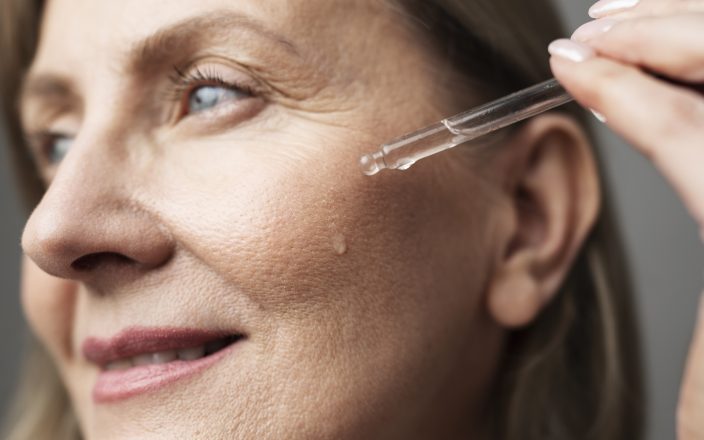
If there’s one skincare category I get asked about more than any other, it’s acids.
Many people worry they will be too harsh for their skin but there are so many products on the market today that are balanced and skin-barrier friendly.
For people who’ve historically avoided acids altogether, it might be time to consider giving one a go. Used properly, I believe exfoliating acids are one of the most transformative things you can add to a routine, at any age.
What are AHAs?
Alpha hydroxy acids (AHAs) are water-soluble chemical exfoliants that dissolve the bonds holding dead skin cells to the surface, showing brighter, more radiant and smoother skin underneath.
Using an AHA means revealing new skin without harsh physical scrubs. They can also soften rough areas, reduce the appearance of pores, hyperpigmentation and acne scarring, and stimulate collagen production over time for firmer skin.
In a salon, aestheticians will use AHAs in chemical peels and often to prep skin for ultrasound facials or laser or LED light therapies.
Before you invest in your own AHAs, make sure you introduce them slowly into your skincare routine and you don’t over-use them.
Most will also increase your skin’s sensitivity to the sun, so wearing an SPF is essential when you’re using them.
Glycolic Acid
This has the smallest molecular weight of all the acids, so it penetrates deepest, which is why it’s the one most commonly used by professionals in the beauty industry. Many products contain high levels of it, and used incorrectly, it can chemically burn the skin – so if you’re using products with a higher concentration (the UK safe at-home limit is 4%), treat with real caution and, ideally, professional guidance.
Lactic Acid
Lactic acid has a larger molecule size, which makes it milder, offering a gentler exfoliation. This is one I’d suggest for dry and sensitive skin. Unlike the others, it doesn’t increase sun sensitivity (although I always recommend it for preventing premature skin ageing!)
The percentage of lactic acid in YNNY’s Lactic Acid Exfoliator is low and it’s unscented, so it’s suitable for daily use and for all skin types, particularly people with sensitive and acne-prone skin.
Mandelic Acid
This is the largest molecule of the three, so it penetrates the skin gradually, which causes less irritation than glycolic or lactic acid. It can be helpful for people with blemished, textured skin, and because it’s mild, people with sensitive skin can tolerate it.
What are BHAs?
The other family of facial acids is BHAs (beta-hydroxy acids), which are oil-soluble and penetrate inside the pores to dissolve sebum and clear out blackheads and blemishes.
They can help control excess sebum production in oily skin types, treat breakouts and improve overall skin tone and clarity.
In a salon setting, facials for oily or combination skin and acne will likely use BHAs at different stages, for instance before and after extractions.
Salicylic cid
The most widely used BHA, traditionally derived from willow bark, salicylic acid is often used in acne remedies and skincare for its ability to decongest pores, treat spots and blackheads.
If you have sensitive skin or want a product for daily use, look for a concentration of 0.5% to 1%. The maximum legal over-the-counter limit in the UK is 2%, which would suit people with stubborn acne, blackheads and excess oil.